
Leadership Lessons from the Deer Stand | Week 4
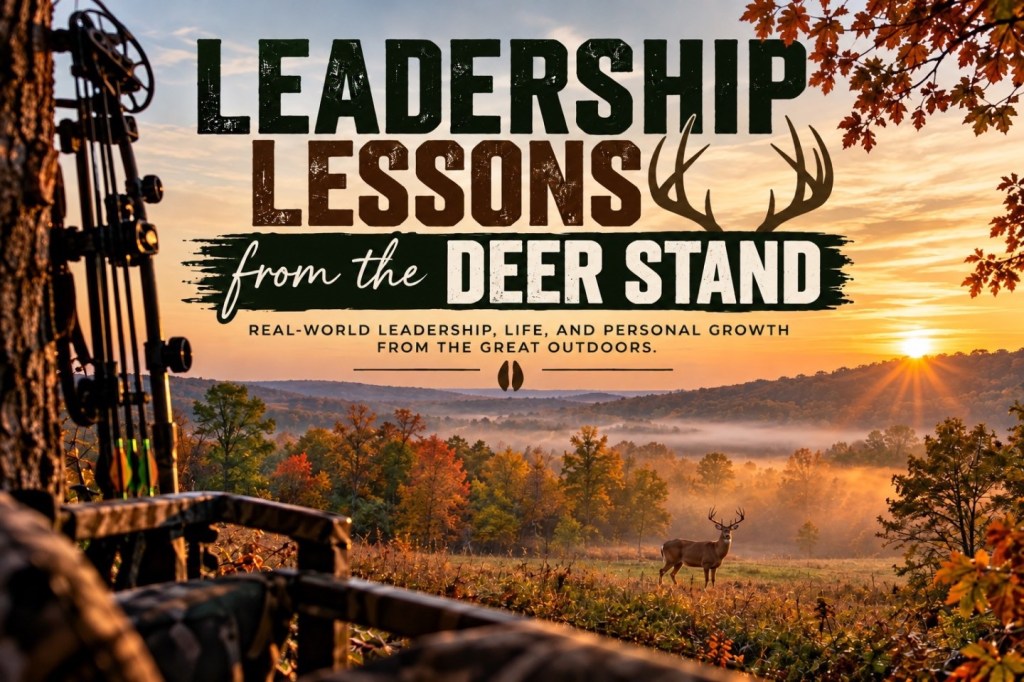
If you’ve ever spent much time working on a food plot, you know there’s a whole lot more involved than scattering some seed on the ground and hoping something grows.
Depending on the property and the condition of the ground, you might spend hours clearing brush, mowing, tilling, checking the soil, spreading fertilizer, and getting everything ready to plant.
And that’s before you ever put a seed in the ground.
Then comes the decision about what you’re going to plant.
Clover? Wheat? Oats? Brassicas? Maybe a combination of several things.
There are plenty of options, and hunters have their preferences. Some have their favorite seed blends. Others have spent years experimenting with different food plots, trying to figure out what grows best on their property and what the deer seem to prefer.
But here’s something interesting about all that work.
When we’re planting a food plot, we’re not necessarily planting what we like.
We’re planting what the deer like.
We want to grow something they’re interested in eating. Something that provides nutrition, attracts them to the property, and gives them a reason to keep coming back.
And when we get it right, we begin seeing the results.
Deer start visiting the plot. Maybe we begin seeing more activity on our trail cameras. We start noticing patterns in when and where the deer are feeding.
And hopefully, when hunting season arrives, some of those deer will continue showing up.
Of course, nothing is guaranteed. Anyone who’s hunted long enough knows that deer don’t always cooperate with our plans.
But we’ve done something important.
We’ve created an environment that gives them a reason to be there.
And I think there’s a pretty valuable leadership lesson in that.
Are We Planting What People Actually Need?
Think about the amount of effort we put into planting something deer want.
We study their habits. We pay attention to what they eat. We try different things. We learn what works and what doesn’t.
Why?
Because we understand that if we want deer to visit our food plots, we have to offer something they’re interested in.
Now, think about leadership for a minute.
How often do we expect people to follow us simply because we’re in charge?
We have a title. We have a position. Maybe we own the company or manage the department.
And because of that, we expect people to listen, cooperate, and give us their best.
But have we ever stopped to ask ourselves why someone would actually want to follow us?
What are we providing?
Are we giving people an environment where they can grow?
Are we offering guidance, encouragement, and support?
Do the people around us feel valued, or do they feel like they’re simply there to accomplish what we want?
Those are questions worth asking.
Because just like that food plot, leadership isn’t simply about getting people to show up.
It’s about what we provide when they do.
If you want people to keep showing up, give them something worth coming back for.
A Leader’s Job Isn’t Just to Attract People
Now, I want to be careful with this comparison.
People aren’t deer, and leadership certainly isn’t about figuring out how to lure people into doing what we want.
That’s not the lesson.
The lesson is about understanding needs and creating an environment where those needs are taken seriously.
Think about a good leader you’ve worked for.
Not necessarily the person with the biggest title or the most authority.
I’m talking about someone you genuinely enjoyed working with.
Someone who made you want to give your best.
Chances are, they provided something that mattered to you.
Maybe they believed in you when you weren’t sure you believed in yourself.
Maybe they challenged you to become better.
Maybe they listened when you had something to say.
Maybe they cared about you as a person instead of treating you like another name on a schedule.
Whatever it was, they gave you a reason to want to be part of what they were building.
And that’s the kind of leader I believe we ought to strive to become.
Not someone people follow because they have to.
Someone people want to follow because they’ve experienced the value of being part of that relationship.
The Same Lesson Applies to Business
As a business owner, this is something I think about quite a bit.
Every business wants customers.
We spend money on advertising, marketing, websites, social media, promotional products, and all sorts of things designed to attract people to our businesses.
And those things have their place.
But getting someone to become a customer is only part of the equation.
What happens after they do business with us?
Did we provide what we promised?
Did we communicate clearly?
Did we treat them with respect?
Did we deliver something worthwhile?
Or were we so focused on getting the sale that we forgot about the relationship?
I’ve always believed that the best kind of business growth happens when people have a reason to come back and a reason to tell somebody else about their experience.
That’s not to say marketing isn’t important. It absolutely is.
But marketing can only do so much.
If we spend all our time trying to attract customers without paying attention to the experience we’re providing, sooner or later we’re going to have a problem.
It’s a lot like planting a beautiful food plot that doesn’t produce anything the deer want to eat.
It might look impressive from the road.
But looking good isn’t the same thing as providing value.
Attracting someone once is an accomplishment. Giving them a reason to return is a responsibility.
You Have to Keep Tending the Plot
Here’s another thing about food plots.
You can’t just plant one and assume your work is finished forever.
Depending on what you’ve planted, you may have to mow it, fertilize it, control weeds, replant areas, or make adjustments based on weather and growing conditions.
Some years, the plot does great.
Other years, it doesn’t turn out the way you’d hoped.
Maybe you didn’t get enough rain. Maybe the weeds took over. Maybe the soil wasn’t quite right for what you planted.
Whatever the reason, food plots require attention.
And if you neglect them long enough, they may eventually stop producing what attracted the deer in the first place.
I think the same thing happens in leadership.
You can build a great team.
You can establish trust.
You can create a workplace where people enjoy showing up and feel like they’re part of something meaningful.
But you can’t assume those things will maintain themselves.
Relationships require attention.
Trust requires consistency.
People need continued encouragement, communication, and investment.
You can’t spend months building a positive environment and then stop paying attention to it because you think everything is going well.
That environment needs to be maintained.
I’ve seen how easy it is to get caught up in the day-to-day demands of running a business. There are customers to serve, problems to solve, deadlines to meet, and bills to pay.
And sometimes, if we’re not careful, we become so focused on running the business that we forget to invest in the people who help make it possible.
That’s a mistake worth guarding against.
Because you can have the best plans in the world, but if you neglect the people around you, those plans become a whole lot harder to accomplish.
What Are You Growing?
There’s something else about food plots that I find interesting.
We can prepare the soil, plant the seed, and do everything we know to encourage growth.
But we can’t force it to happen.
We can provide the right conditions, but we don’t control the weather.
We don’t control exactly how much rain falls or whether the temperature cooperates.
And we certainly can’t force a deer to walk into the plot.
We can only do our part.
Isn’t that true of leadership?
We can create opportunities for people.
We can provide training, encouragement, resources, and support.
We can help create an environment where growth is possible.
But we can’t make someone grow.
We can’t force someone to become a better leader, develop stronger habits, or take advantage of every opportunity available to them.
That part belongs to them.
Our responsibility is to provide the best environment we reasonably can.
And then continue tending to it.
That’s not always easy, especially when we’re investing in people and not seeing the results we’d hoped for.
But just like the food plot, the work still matters.
It’s Not Always About What You Get
Now, I want to take this lesson one step further.
A hunter plants a food plot because he hopes it will improve his hunting opportunities.
That’s part of the goal.
But if we’re talking about leadership, I don’t believe we should approach relationships with the mindset of doing something for people only because we expect something in return.
That’s not leadership.
That’s a transaction.
Genuine leadership involves caring about the people we’re responsible for, even when there isn’t an immediate benefit to us.
It means helping someone develop their skills, even if they eventually take those skills somewhere else.
It means investing in people because they matter.
It means creating opportunities for others to succeed, even when we don’t get the recognition.
And sometimes it means doing the right thing when nobody is watching and there’s nothing obvious to gain.
I think those are some of the things that separate someone who simply holds a leadership position from someone who actually leads.
Because the best leaders I’ve known didn’t just expect people to produce results.
They invested in the people producing them.
Give Them a Reason to Come Back
As you think about the food plots you’ve planted or the places you’ve hunted over the years, you probably remember some that produced better than others.
Some became places where you regularly saw deer.
Others required a lot of work and never seemed to produce quite what you’d hoped.
And if you’re anything like most hunters, you probably spent time figuring out why.
Was it the soil?
The location?
What you planted?
The amount of sunlight?
Did something need to change?
You evaluated the results and tried to improve.
Maybe we need to approach our leadership the same way.
If people don’t seem engaged, maybe we ought to ask why.
If employees keep leaving, maybe we need to take an honest look at the environment we’ve created.
If customers aren’t coming back, maybe we ought to evaluate the experience we’re providing.
If relationships in our lives seem distant, maybe it’s time to consider how much we’ve been investing in them.
Not every problem is something we caused, and not everything is within our control.
But we should be willing to examine the things that are.
Because sometimes we get so focused on what we’re trying to accomplish that we forget to consider what we’re providing to the people around us.
And that’s really what this lesson comes down to.
Whether we’re talking about leadership, business, ministry, friendships, or family, we ought to be asking ourselves a pretty simple question.
Am I creating an environment where people can find something genuinely worthwhile?
Not something that simply benefits me.
Something that benefits them, too.
Because when people consistently find encouragement, respect, honesty, support, and opportunities to grow, they’re much more likely to value the relationship.
And those are the kinds of relationships worth cultivating.
So the next time you’re sitting in a deer stand overlooking a food plot, think about all the work that went into preparing that little piece of ground.
The soil that had to be worked.
The seeds that had to be planted.
The attention it took to help things grow.
And the reason you chose to plant what you did in the first place.
You wanted to create something that would give the deer a reason to keep coming back.
Maybe there’s a lesson in that for all of us.
If you want people to keep showing up, give them something worth coming back for.
And once you’ve created it, don’t stop tending to it.
That’s another lesson I’ve learned from the deer stand.
And one worth carrying into the rest of our lives.
Something to Think About
What are you cultivating in the lives of the people around you?
Are you creating an environment where people feel valued, encouraged, and supported?
And perhaps most importantly, are you consistently providing the same value that brought them into the relationship in the first place?
I’d love to hear your thoughts.
This is Week 4 of Leadership Lessons from the Deer Stand, an eight-week series by Kris Logsdon exploring leadership, life, faith, and personal growth through experiences and observations from the deer woods.
Join me every week for another lesson from the deer stand.

