There’s a dangerous myth in leadership circles that says you must always have the answers. That if you’re not the smartest person in the room, you’re somehow not qualified to lead. But the truth is far different—and far more freeing:
As a leader, you don’t have to be right all the time.
In fact, believing you do can create more harm than good.
Leadership Isn’t About Being Right—It’s About Getting It Right
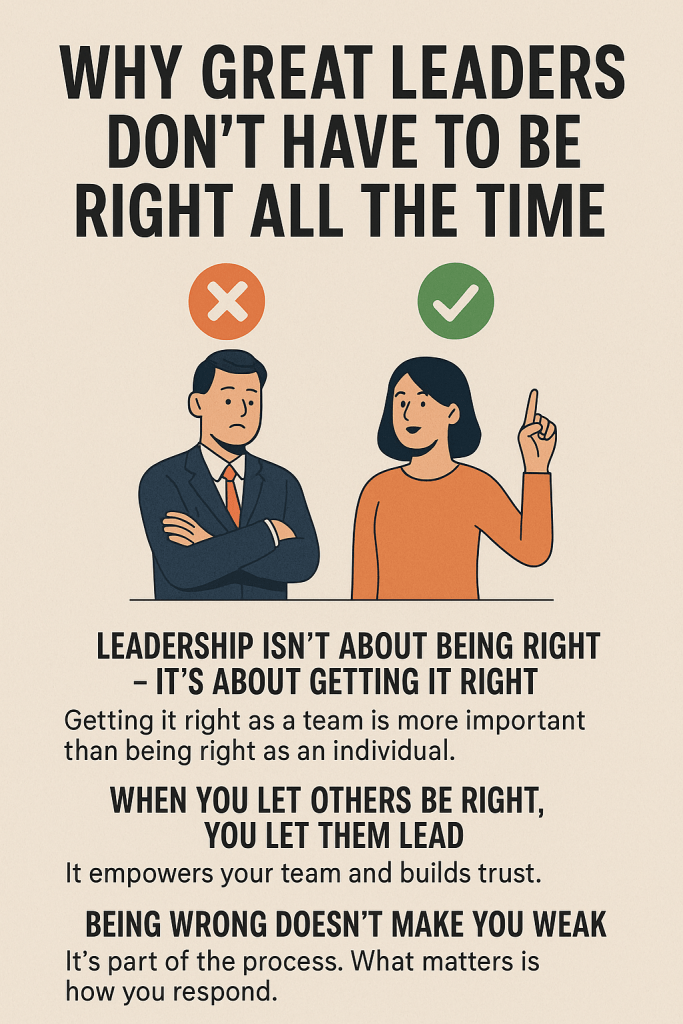
Effective leadership isn’t measured by how often you’re right. It’s measured by how well your team functions, how healthy your culture is, and how consistently you move toward your goals. Getting it right as a team is far more important than being right as an individual.
When you cling to the need to always be right, you stifle creativity, breed fear, and build walls between you and your team. But when you admit you’re wrong and give credit where it’s due, you build trust, loyalty, and momentum.
When You Let Others Be Right, You Let Them Lead
One of the most powerful things a leader can say is, “You’re right—I didn’t see it that way.” That phrase doesn’t weaken your authority; it strengthens it. Why? Because it shows humility, confidence, and a deep commitment to truth over ego.
Letting others be right:
Empowers your team – It reinforces that their voice matters. Develops future leaders – People grow when they’re allowed to think, contribute, and correct. Fosters innovation – When people aren’t afraid to disagree, creativity flourishes. Builds trust – Vulnerability is magnetic. People follow leaders who are real, not perfect.
Being Wrong Doesn’t Make You Weak
Being wrong is part of the process. What matters is how you respond to it. Do you double down and deflect? Or do you own it and grow?
When leaders are open about their missteps, they create a culture where learning is safe and excellence is pursued over ego. That kind of culture doesn’t just survive—it thrives.
The Best Leaders Are Lifelong Learners
The leaders who have the most lasting impact are the ones who are always learning—especially from the people around them. They ask questions, invite feedback, and stay curious. They’re confident enough to lead and humble enough to listen.
Final Thought: Check Your Ego at the Door
Leadership is not about proving yourself. It’s about serving others. When your goal shifts from “being right” to “doing right,” everything changes.
So let your team shine. Let them be right. And when you’re wrong, thank them for helping you see what you couldn’t.
Because at the end of the day, leadership isn’t about being the hero—it’s about helping your team win.
 krislogsdon.com