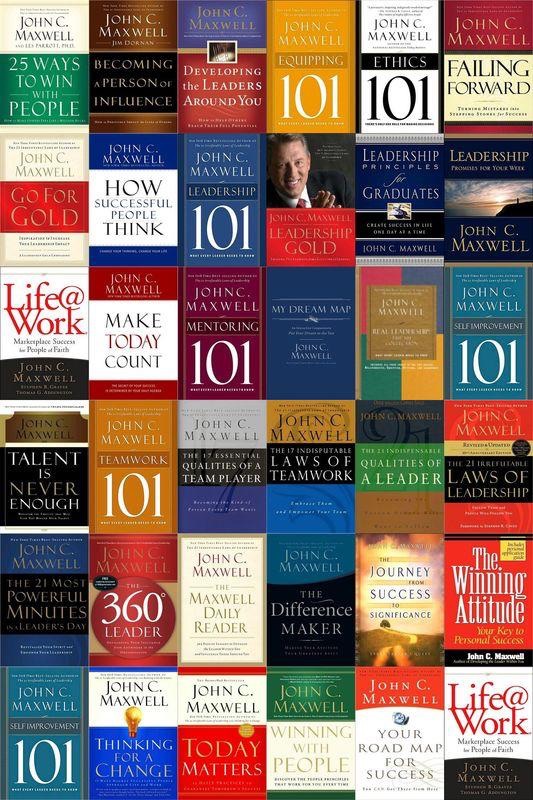
10 Leadership Tips from John Maxwell

The 10 Greatest Leadership Tips from John Maxwell
1. Leadership Is Influence — Nothing More, Nothing Less

📘 The 21 Irrefutable Laws of Leadership

You don’t need a title to be a leader. Leadership is about your ability to influence others positively. Grow your influence, and your leadership will grow with it.

2. People Buy into the Leader Before They Buy into the Vision

📘 The 21 Irrefutable Laws of Leadership

No matter how great your idea is, people won’t follow it unless they trust you. Earn their trust, and they’ll follow your lead.

3. Everything Rises and Falls on Leadership

📘 Developing the Leader Within You

The health and success of any organization—business, church, family—will reflect the health of its leadership. If you want things to get better, start with yourself.

4. You Must Climb the 5 Levels of Leadership

📘 The 5 Levels of Leadership

Maxwell describes a leadership growth journey:

Position – people follow because they have to

Permission – people follow because they want to

Production – people follow because of what you do

People Development – people follow because of what you’ve done for them

Pinnacle – people follow because of who you are and what you represent

5. Leaders Develop Daily, Not in a Day

📘 The 15 Invaluable Laws of Growth

Growth is intentional, not accidental. Great leaders make a daily habit of investing in their personal development.

6. A Leader’s Greatest Return Comes from Developing People

📘 Leadership Gold

Pouring into others multiplies your impact. Don’t just build the business—build the people who will build the business.

7. Your Attitude Determines Your Altitude

📘 The Winning Attitude

A bad attitude limits your potential. A positive, teachable spirit opens doors that talent and knowledge alone cannot.

8. Failing Forward Is the Key to Success

📘 Failing Forward

Don’t fear failure—learn from it. The difference between average and exceptional leaders is how they respond to setbacks.

9. The Law of the Lid: Your Leadership Ability Determines Your Level of Effectiveness

📘 The 21 Irrefutable Laws of Leadership

Your organization or team will never grow beyond your capacity to lead. Raise your lid, and you raise everything around you.

10. People Do What People See

📘 Leadership Gold

Leadership is more caught than taught. Your example is your most powerful tool. Live what you teach, and others will follow.

John Maxwell’s leadership legacy is built on timeless truths and practical wisdom. These 10 tips are just a glimpse into the leadership goldmine he has shared across decades. If you want to lead better, start living better—and never stop growing.
Great Leaders Aren’t Always Right

There’s a dangerous myth in leadership circles that says you must always have the answers. That if you’re not the smartest person in the room, you’re somehow not qualified to lead. But the truth is far different—and far more freeing:

As a leader, you don’t have to be right all the time.

In fact, believing you do can create more harm than good.

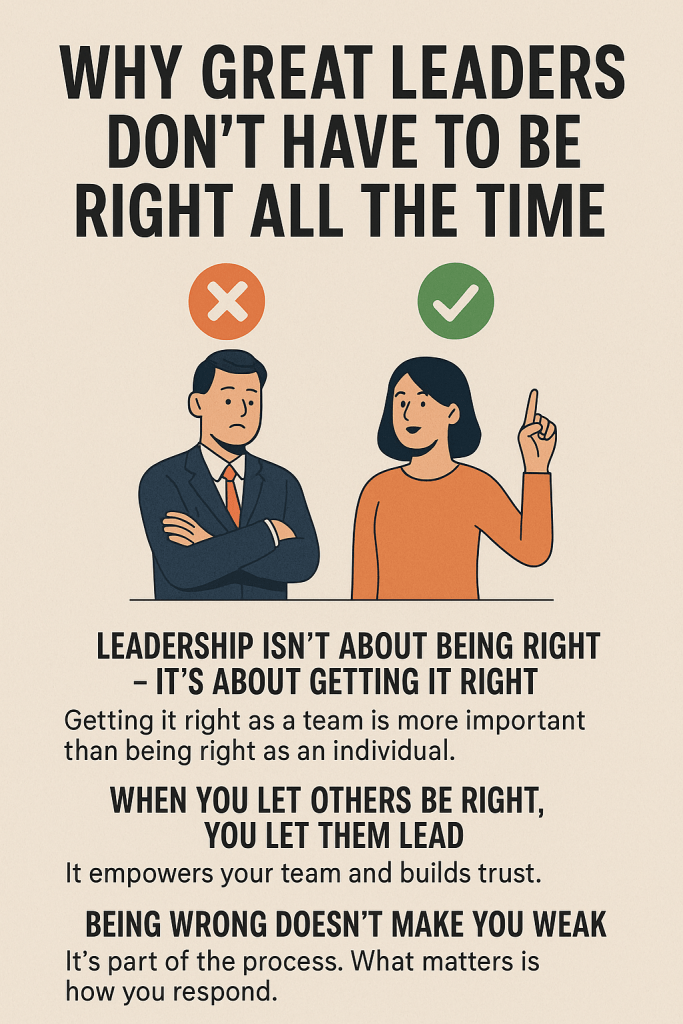
Leadership Isn’t About Being Right—It’s About Getting It Right

Effective leadership isn’t measured by how often you’re right. It’s measured by how well your team functions, how healthy your culture is, and how consistently you move toward your goals. Getting it right as a team is far more important than being right as an individual.

When you cling to the need to always be right, you stifle creativity, breed fear, and build walls between you and your team. But when you admit you’re wrong and give credit where it’s due, you build trust, loyalty, and momentum.

When You Let Others Be Right, You Let Them Lead

One of the most powerful things a leader can say is, “You’re right—I didn’t see it that way.” That phrase doesn’t weaken your authority; it strengthens it. Why? Because it shows humility, confidence, and a deep commitment to truth over ego.

Letting others be right:

Empowers your team – It reinforces that their voice matters. Develops future leaders – People grow when they’re allowed to think, contribute, and correct. Fosters innovation – When people aren’t afraid to disagree, creativity flourishes. Builds trust – Vulnerability is magnetic. People follow leaders who are real, not perfect.

Being Wrong Doesn’t Make You Weak

Being wrong is part of the process. What matters is how you respond to it. Do you double down and deflect? Or do you own it and grow?

When leaders are open about their missteps, they create a culture where learning is safe and excellence is pursued over ego. That kind of culture doesn’t just survive—it thrives.

The Best Leaders Are Lifelong Learners

The leaders who have the most lasting impact are the ones who are always learning—especially from the people around them. They ask questions, invite feedback, and stay curious. They’re confident enough to lead and humble enough to listen.

Final Thought: Check Your Ego at the Door

Leadership is not about proving yourself. It’s about serving others. When your goal shifts from “being right” to “doing right,” everything changes.

So let your team shine. Let them be right. And when you’re wrong, thank them for helping you see what you couldn’t.

Because at the end of the day, leadership isn’t about being the hero—it’s about helping your team win.

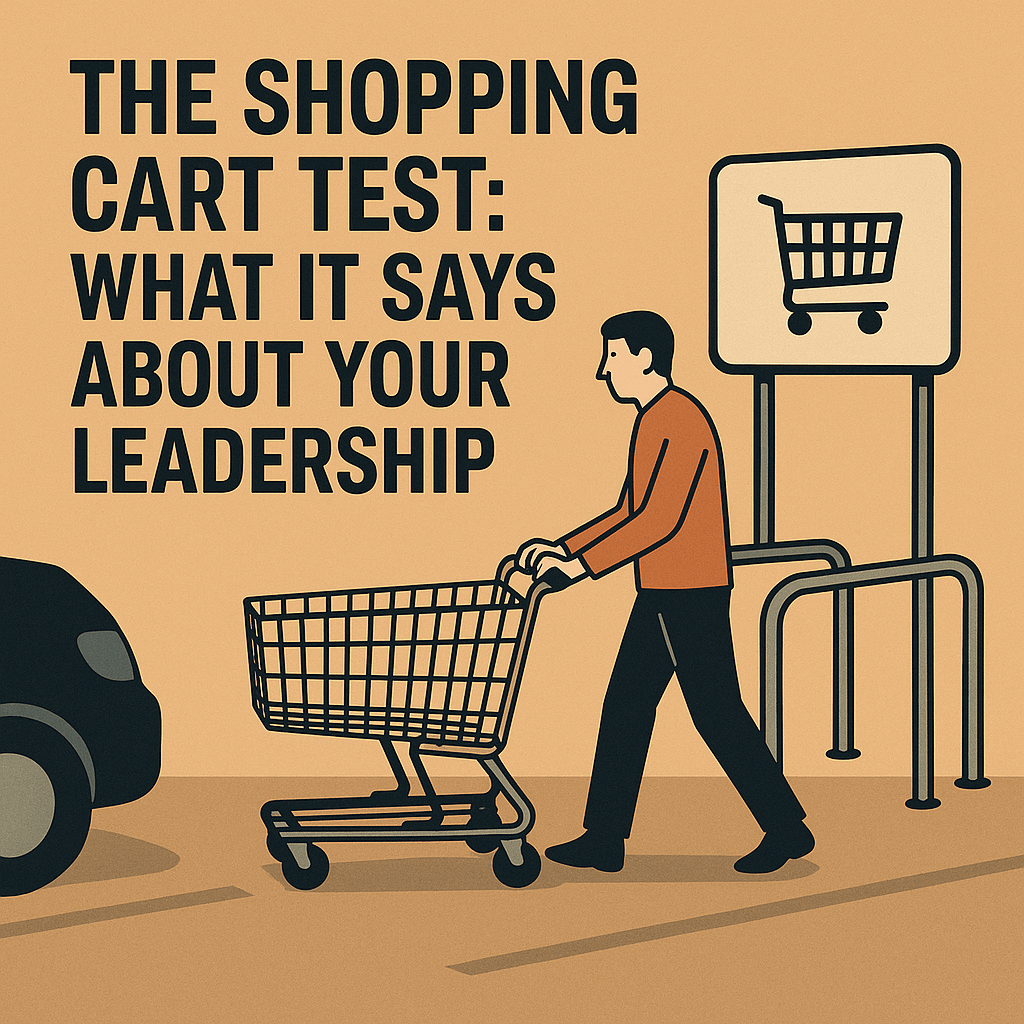
The Shopping Cart Test: What It Says About Your Leadership

Have you ever walked through a parking lot and seen shopping carts scattered everywhere—left between cars, up on curbs, or halfway across the lot from the store?

Maybe you’ve even asked yourself the question:

“Who does that?”

But the better question might be:

“What does it say about you if you don’t?”

Returning a shopping cart to the corral might seem like a small, mundane task—but it’s one of the clearest, most consistent tests of character and leadership you’ll ever encounter.

The Shopping Cart Test

There’s no rule that says you must return your shopping cart. No legal consequences. No one is watching. No manager is grading your performance. It’s one of the few public acts that’s completely voluntary and has no immediate reward or punishment.

And that’s what makes it powerful.

Returning your cart says something about:

Your discipline Your self-respect Your willingness to do the right thing even when no one is watching

In short, it reveals who you are when it’s easy not to care.

What It Says About You as a Leader

Great leadership doesn’t start on a stage—it starts in a parking lot. It starts with the decisions you make when they seem insignificant.

Here’s what returning your shopping cart says about your leadership:

1. You Take Ownership

You don’t leave your mess for someone else to deal with. Leaders own their responsibilities—and that includes the little things.

2. You Respect Others

Leaving a cart in the lot blocks spaces, scratches cars, and creates work for someone else. Returning it shows consideration—something every great leader must have.

3. You Lead Yourself First

Before you can lead a team, a business, or a movement—you must lead yourself. Leadership starts with self-discipline, and discipline shows up in the everyday.

4. You Practice Integrity

Integrity is doing what’s right even when no one is watching. No spotlight, no applause. Just quiet consistency.

5. You Understand Culture is Built in the Small Things

Teams, companies, and families don’t rise and fall because of grand gestures—they rise and fall based on the small behaviors that become habits. Returning your cart is one of those habits.

A Mirror and a Model

Next time you’re in the parking lot, take a look around.

Where are the carts?

Where are you?

The shopping cart is more than a chore—it’s a mirror. It reflects what kind of leader you are when no one is looking.

And it’s also a model—because when you return the cart, you’re modeling the kind of accountability, respect, and personal responsibility the world desperately needs.

Bottom Line

If you can’t be trusted to return a cart, why should anyone trust you with a team?

If you cut corners when it doesn’t matter, how will you behave when it does?

Great leadership isn’t proven in the boardroom—it’s proven in the parking lot.

Return the cart. Build the character. Lead with integrity.

-KL

Flipping the Funnel: A Leadership Principle That Changes Everything

Leadership is often seen through the lens of hierarchy—top-down authority, control, delegation. Picture the traditional funnel: wide at the top, narrow at the bottom. In this model, the leader sits at the top, pouring out vision, decisions, and pressure down the line. But what if we flipped that funnel?

What if true leadership meant moving from being served to serving?

From commanding authority to cultivating influence?

That’s the essence of flipping the funnel—a transformational leadership principle that turns conventional thinking upside down and redefines how great leaders operate.

The Traditional Funnel: Power Flows Down

In traditional leadership, the flow of power and responsibility is often top-heavy. Leaders make decisions, and others follow orders. While this might keep operations moving, it can stifle creativity, suppress initiative, and drain morale.

Top-down leadership asks:

How can my team help me reach my goals? What do I need from others? How can I maintain control?

But that mindset leads to bottlenecks at the bottom—burnout, disengagement, and missed potential.

Flipping the Funnel: Power Lifts Others Up

Flipped funnel leadership turns the triangle upside down. The leader now takes the position of greatest responsibility, not greatest privilege. The goal? Empower those above you in the inverted model—your team, your clients, your community.

Flipped leadership asks:

How can I help my team succeed? What do they need to grow, thrive, and lead? How do I remove obstacles and unleash potential?

This approach echoes servant leadership, made famous by leaders like Jesus, Nelson Mandela, and more recently, Simon Sinek and John Maxwell.

Core Principles of Flipped Funnel Leadership

1. Serve First, Lead Second

Great leaders ask, “How can I serve my people?” They understand that leadership isn’t about titles—it’s about trust.

2. Build from the Bottom

Instead of demanding compliance, build competence. Equip your team with skills, confidence, and clarity.

3. Give Away Credit and Keep the Responsibility

Celebrate your team’s wins. When failure comes, own it. That’s leadership maturity.

4. Lead with Vision, Not Ego

When you flip the funnel, you no longer need to be seen as the leader—you just need to be one.

5. Create Space, Not Control

Micromanagement kills momentum. Trust builds culture. Release authority and watch others rise.

Why It Matters

In a world where people are tired of being managed and hungry to be mentored, flipped funnel leadership builds what every organization longs for: buy-in, ownership, and impact.

It’s not about doing less as a leader. It’s about doing the right things:

Listening more. Coaching consistently. Modeling what matters. Creating leaders, not followers.

The Bottom Line

Flipping the funnel isn’t just a leadership hack—it’s a mindset shift. When you move from being the point to being the support, everything changes. Teams thrive. Culture shifts. Influence grows.

Great leaders aren’t standing above—they’re standing underneath, lifting others up.

Ready to flip the funnel in your leadership?

Start by asking one question today:

“Who can I serve that will lead better because of me?”

Beyond the Pulpit: The Power of Unlikely Sources and the Need for Jesus in the Storms


Reflections on John 6:1-21

In the rush and rhythm of daily life, we often find ourselves handling responsibilities, challenges, and the unexpected on our own. We may not consciously exclude Jesus, but slowly, our actions begin to suggest that we’ve got things under control. John 6:1-21 is a passage that brings us back to the truth of our dependence on Christ, revealing how He works through unlikely sources and shows up in the storms of life when we need Him most.

An Unlikely Hero: The Young Boy’s Role in the Miracle

As Jesus stands before a hungry crowd of over 5,000 people, He challenges His disciples with a seemingly impossible task: feeding the multitude. It’s here that a young boy, whose name we do not know, becomes instrumental in this miraculous story. He steps forward with a humble offering—five barley loaves and two small fish. This simple lunch is insignificant when compared to the vast needs before them, but it’s exactly what Jesus uses.

Why would Jesus choose such an unlikely source? In a culture where children often had a low status, it would have been easy to overlook this boy. Yet, Jesus not only sees him but uses him as a vessel for His power. It’s a reminder that God often works through the unexpected and the overlooked.

The lesson here is profound: the size of our offering doesn’t matter, but the heart behind it does. The boy’s willingness to give what little he had becomes the catalyst for a miracle that feeds thousands. Jesus takes what is offered in faith—no matter how small—and multiplies it beyond imagination. This is true in our lives too. Often, we think that what we have to offer—our skills, our resources, our time—is too small to make a difference. But when placed in Jesus’ hands, even the smallest gift can become something extraordinary.

Setting Out Without Jesus: A Picture of Self-Reliance

As evening falls, the scene shifts from a mountainside filled with abundance to a stormy sea. The disciples board their boat and head for Capernaum, but this time, they set out without Jesus. It’s a subtle but significant detail. The One who had just performed a miracle in their midst is not with them as they face the unpredictable waters.

It doesn’t take long before trouble arises. A strong wind stirs up the sea, and the disciples find themselves struggling against the waves. In this moment, their decision to leave without Jesus mirrors a tendency that many of us share: the belief that we can handle things on our own. Whether it’s in our work, relationships, or day-to-day decisions, we often find ourselves navigating life as if we can manage just fine without God’s presence.

But the storm is quick to reveal our need. As the waves crash against the boat and fear sets in, the disciples realize that their strength is insufficient. It’s in this moment of desperation that Jesus comes to them, walking on the water and speaking words of reassurance: “It is I; don’t be afraid” (John 6:20).

Learning to Welcome Jesus Back into the Boat

The story of the disciples on the sea is a vivid illustration of our own lives. How often do we set out on our plans, our ventures, and our challenges without truly seeking Jesus’ presence? And how often do the storms of life catch us off guard, reminding us that we were never meant to do this alone?

The good news is that, like the disciples, we can welcome Jesus back into the boat. Even when we’ve tried to go it alone, He is never far off, ready to speak peace into our chaos and calm our fears. It’s a call for us to recognize our need for Jesus not just in the storms, but in every part of our journey.

Beyond the Pulpit: A Challenge for Everyday Life

John 6:1-21 offers two powerful challenges for us to take beyond the pulpit and into our daily lives:

1. Offer What You Have, Even When It Seems Small: The young boy’s story encourages us to bring our little to Jesus, trusting that He can do much with it. Whether it’s our time, our gifts, or our resources, God delights in using what we offer, no matter how small, for His greater purpose.

2. Don’t Leave Shore Without Jesus: The disciples’ story is a reminder that life’s journey is best navigated with Jesus in the boat. When we face challenges, uncertainty, or even the ordinary rhythms of life, let’s make it a habit to seek His presence, rather than assuming we can manage on our own. It’s better to weather the storm with Jesus than to struggle through calm waters alone.

In the end, both the young boy’s offering and the disciples’ stormy struggle point us back to the same truth: our need for Jesus. He is the source of abundance when we feel lacking, and He is the calm in the midst of chaos. As we go about our week, let’s strive to keep our hearts open to His presence, trusting that He can work through the unexpected and sustain us in every situation.

So God Made A Father

The following poem was written by May Patterson. I want to share this and say Happy Fathers Day to all the fathers out there!!!

And God looked down on all He had made and said, “Now, I need a caretaker.”

So, God made a father.

God said, “I need someone to take children fishing and play catch in the backyard. It must be someone who is tough enough to run a chainsaw and wield a machete and yet, gentle enough to join his little girl and her dolls for tea.”

“I need someone to bring the car around when it’s raining, so everyone else can stay dry. Someone who will keep jumper cables in his truck, just in case he needs to help a stranger. I need someone to notice practical things, like how the tread on the tires is wearing and if the weather stripping around the front door needs replacing, for no one else will.”

“Yes, he will struggle to find his socks and keys. But I’ll help him find time for the important things, like tumbling with the kids in the den floor, or saying ‘I’m proud of you, son,’ or giving Mama a hug.”

So God made a father.

God thought, “I need someone to provide for the family. Someone who will get up early and stay up late and never complain. I need someone who’s willing to make unpopular decisions and stand by them. Someone to provide authority and discipline, as well as love.”

“I need someone who listens more than he talks. Who will stand by his family through laughter and tears, tornadoes and snowstorms, good times and bad. Someone who will love his kids and love their mother even more.”

“I need someone who is willing to carve the Thanksgiving turkey, for no one else seems to want the job.”

“I’ll make someone who’s not afraid to go into Grandma’s dark cellar, or to check on what goes bump in the night, or to remove the dead mouse from the mousetrap. Someone who will yank a child back from the path of a speeding car and who will keep a wary eye on strangers.”

“I’ll give him broad shoulders, broad enough to carry a little child around town and broad enough to pull more than his fair share.”

So God made a father.

God said, “I need someone who’s strong enough to open a tightly sealed jelly jar and someone who’s tall enough to place the angel on top of the Christmas tree. And yet, I need someone who is gracious enough to let his son fish the best fishing hole or to let his daughter win at least one hand of gin rummy.”

“Yes, I need someone who is willing to work the second-shift, or take second-best, or play second fiddle, so that his family can have it better than he did.”

“I need someone who’s willing . . . willing to man up and provide the love, support and strength his family will so desperately need.”

So, God made a father.

-May Patterson

He is the first hero a little child will ever know.

His influence lasts much longer than his life.

The Lord created fathers to be a living, breathing display of who He is: a protector, a provider and a leader. And while some earthly fathers fail, many strive to live out God’s plan for fatherhood, even though it’s a pretty tall order.

Consider what God asks fathers to do:

Provide for their families (1 Tim. 5:8)

Love sacrificially (Eph. 5:25-33)

Teach their children about the Lord (Eph. 6:4)

Encourage their children (Col. 3:21)

Talk about God’s word, often (Deut. 6:6-9)

Appreciate their children (Ps. 127:3-5)

Guide their families in serving the Lord (Josh. 24:15)

Set a good example (Prov. 20:7)

Love their children enough to discipline them (Prov. 13:24; 19:18)

Lead their families as Christ leads the church (Eph. 5:23)

Because Fathers Matter-

-K

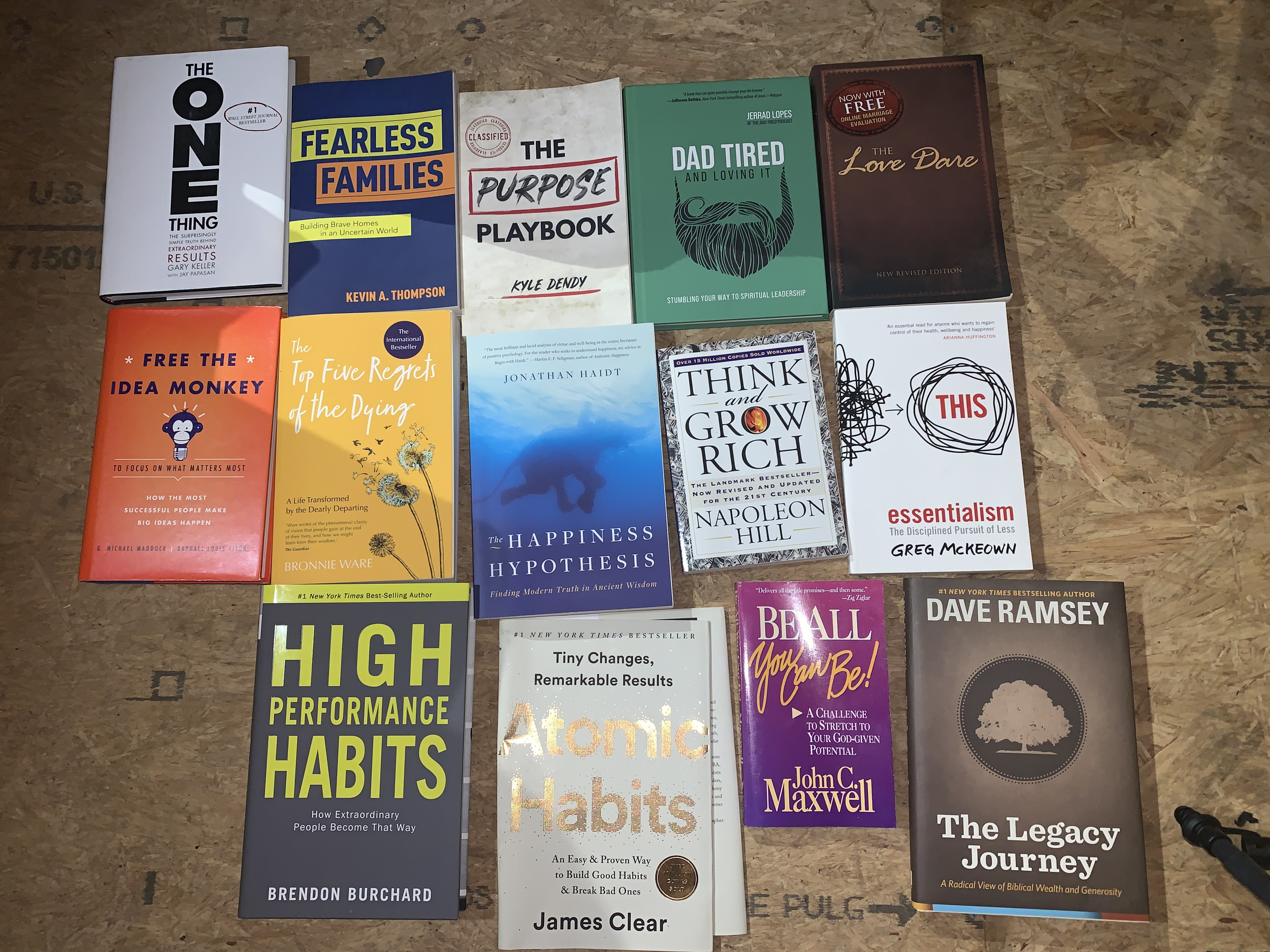
Reading List for 2021

2021 Reading List

“Not All Readers Are Leaders, But All Leaders Are Readers”-Harry S Truman

I really like this quote from Harry S Truman.

I have not always been a big reader however several years ago, I accepted a personal growth challenge to start reading more and ever since then I have literally been addicted to reading.

I initially started reading books on a Kindle but this past year, I really struggled with not having an actual book in my hand so I retired the Kindle and started ordering the actual book. There is something to say about holding an actual book in your hand and having the ability to highlight information on the pages of that boook.

What is on your reading list? What would you add? Would you drop anything from the above list?

Because People Matter

Kris

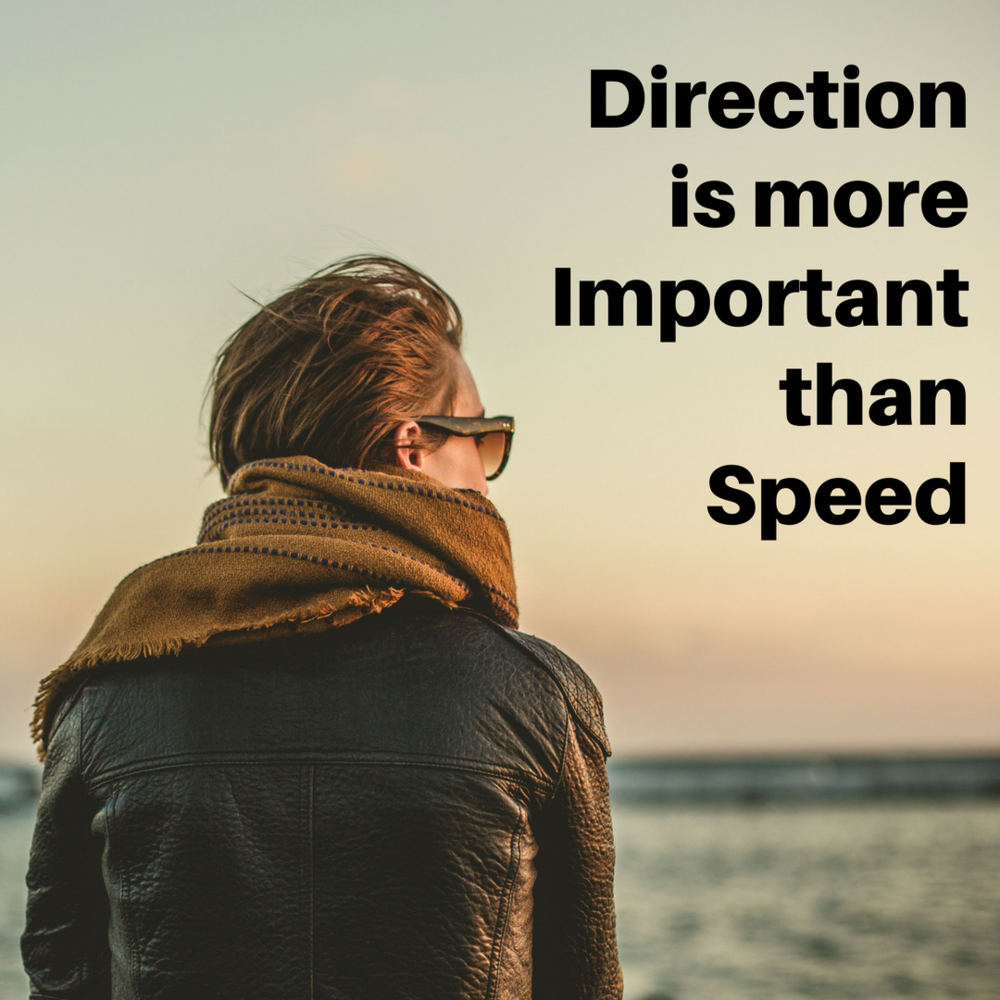
Direction or Speed, What Matters Most?

What is direction? Dictionary.com defines it as “a course along which someone or something moves.” When I think about direction, I think about a destination. A starting point and an ending point. An end goal in mind.

Dictionary.com defines speed as the rate at which someone or something is able to move or operate. Speed does not take into account anything else. You can go very fast without regard to direction or where you are going.

I was talking with a co-worker last week who was discouraged with her weight loss journey. She had not lost the amount of weight that she had wanted within the time frame she wanted. I reminded her that the most important part of meeting her goal was making sure that she was going in the right direction. She was losing weight, maybe not as fast as she wanted but she was in the right direction of losing weight.

Many times we get so focused on something that we get more caught up with the speed rather than the direction. Many people are going nowhere fast because they are more concerned with speed than direction.

Remember that no matter where you are in life, no matter what task you are completing or goal you are meeting, Direction is more important than speed. Getting to the right destination is better than getting to the wrong destination quickly.

Because People Matter

Kris

Routines: Morning vs. Night

Are you a night-owl or a morning riser? Let’s be honest, everyone of us is one or the other. We either stay up late at night and are hard to rise in the morning, or we are early to be and early to rise.

For most of my life, aside from my time in the military, I was a night-owl and hated mornings. I kept the snooze button handy and would have 5-6 alarms set so that I could snooze to the very last minute. What i continually faced was unplanned days and unfinished task/goal lists. At the beginning of 2020, I decided that I was going to make a change to be more intentional with my life. I studied some of who I consider the most successful people and I found that all of them had a few things in common, but the most common was that each of them had a regular morning routine.

What is a morning routine? A morning routine is essentially a set of actions you perform in the morning, usually before starting your day’s main activity like going to work or to school. The actions can be anything from drinking a glass of water or brushing your teeth to doing a two-hour workout or running around the block and more. I sat down and wrote out what I wanted to accomplish in my morning before I started work or before it was time to get everyone else in the house up for the day. What tasks, what goals were most important?.

Early on when I first started my morning routine, I was struggling to get up and get it going. What i discovered was that I was setting my self up for failure due to what I was doing each night before. I would stay up late each night. I was going to bed with my phone or ipad and browsing Facebook, Instagram or the internet. I was doing this until I was exhausted and falling asleep with my phone in my hand. Then when the alarm would go off at 5am, I would just continue to hit snooze. I knew that something had to change.

I quickly figured out that in order to have a successful morning routine, I need a nightly routine as well. Once I put a nightly routine in place, I was able to have a successful morning routine.

I will share in more details what my nightly and morning routines look like in a later post. But first, Do you have a morning routine? What does it look like? What have you found to be most helpful in staying on task with you morning routine?

Because People Matter,

Kris